

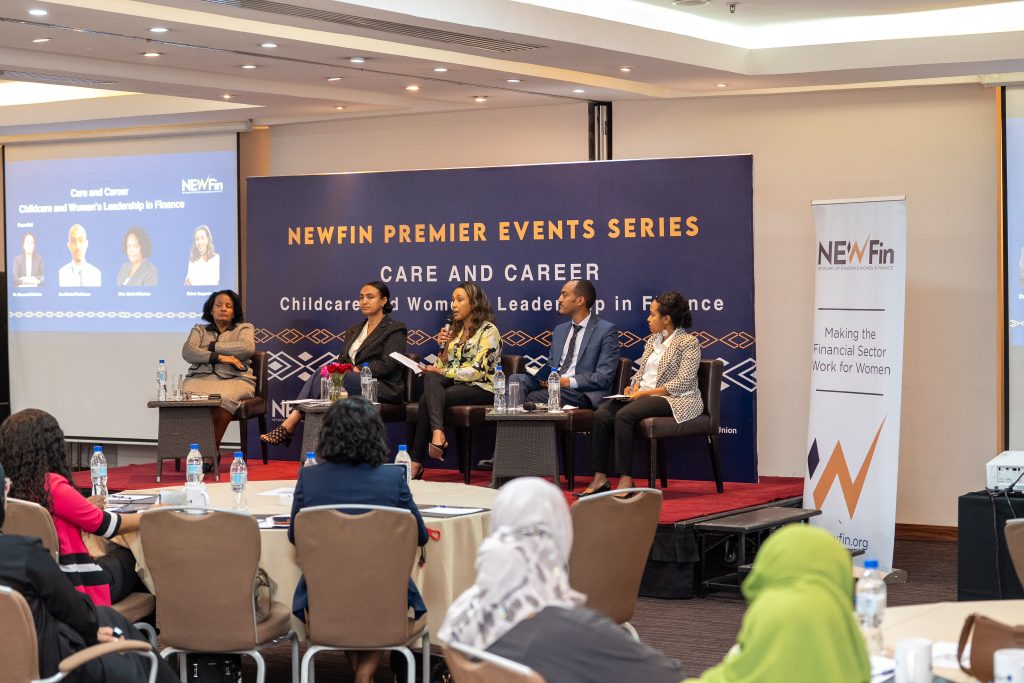
As part of its Premier Event Series, NEWFin hosted a half-day platform titled Childcare and Career: Childcare and Women’s Leadership in Finance on 31 March 2026 at the Radisson Blu Hotel in Addis Ababa.
The objective of the event was to catalyze action by presenting evidence, showcasing workable childcare models, and securing commitments from institutions to pilot or scale daycare/childcare and family-friendly workplace policies that enable women’s leadership.
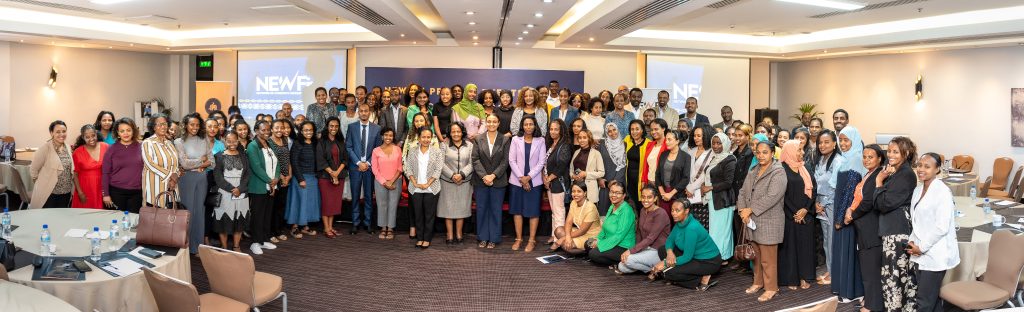
The event was opened by Weynshet Zeberga, Chief Markets & Operations Officer of the National Bank of Ethiopia, followed by a presentation by childcare and mental health expert Dr. Selamawit Zegeye, and a panel discussion featuring Martha HaileMariam, Dr. Meseret Zelalem, Kirubel Tadesse, and Rahel Abayneh. Moderated by Mahlet Merid, the event also included a Q&A session and discussion with the audience, which included NEWFin members, young women finance professionals, bank representatives, trainers, and others.
As a mother, medical doctor, psychotherapy consultant who works with children, and a radio host, Dr. Selamawit described the difficult balancing act required of working women and mothers. She presented data and evidence on the impact of this challenge on women assuming leadership roles, and the support required from society, employers, and policymakers. She discussed the overlap between career and maternity peaks for women aged 25–40. Because women’s reproductive and productive years meet in this age bracket, women can be pressured into balancing the two or choosing one over the other. As a result, working women and mothers carry an “invisible but heavy mental load” resulting from guilt, stress, and identity conflict, often with no one to offer them reassurance. The impact is that, because of the life decisions and sacrifices they make to care for children and family, women exit or stagnate mid-career, drop off, or lag behind in leadership roles, leading to employers and the broader industry losing the unique talent women possess. Dr. Selam concluded by stating how institutions should move intentionally toward strengthening women’s workforce participation, as balancing care and career is critical for advancing women’s leadership.
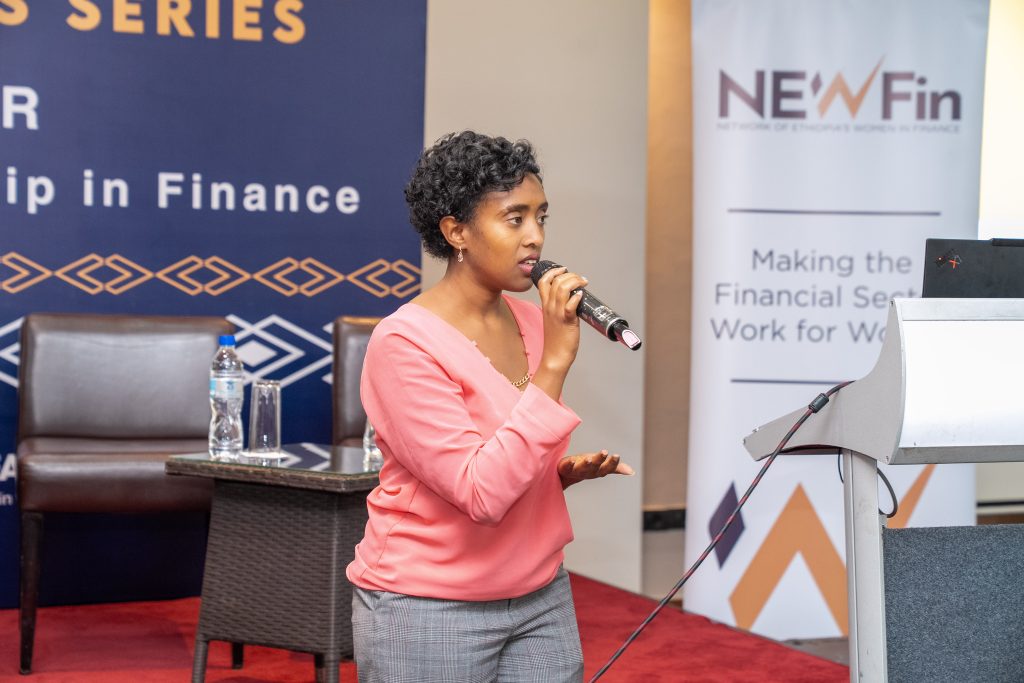
Dr. Meseret Zelalem, a medical doctor, former professor of medicine, public health professional, and a mother of four, emphasized the crucial importance of love, care, attention, balanced nutrition—including breastfeeding—and play in early childhood. “If you ask what Ethiopia will look like tomorrow, you will only need to look at the state of its children today,” she said. “It is the nations that invest most in early childhood that are also the most advanced. We should not only build the generation that can run successful companies such as Ethiopian Airlines and fly its planes; we should build the generation that can make the planes too.” Dr. Meseret emphasized that investing in child development is investing in human capital, which is essential for the sector and the country at large.
Mothers should be supported to stay in the productive workforce, she said, because while women miss the pay, organizations miss out on form of solutions, innovativeness, and decision-making skills that are uniquely rich among women. She also noted commendable public sector efforts, where many government agencies have established daycares for employees, and all health centers and all twelve public hospitals in Addis Ababa have child-friendly services and spaces.
Martha Hailemariam outlined policies enacted by the National Bank of Ethiopia both internally and as a regulator of the financial sector. Internally, the Bank provides a daycare, priority points for women to assume leadership roles, and other gender-responsive HR policies. As a regulator, the National Bank views the promotion of women leaders in the finance sector as a tool for advancing an inclusive financial system in Ethiopia. As such, the Network of Ethiopia’s Women in Finance (NEWFin) is one of the Bank’s initiatives to drive financial inclusion and the empowerment of women professionals in the industry.
Other initiatives include the Gender Scorecard, which measures and tracks financial institutions’ performance on three key indicators, and requires compliance with policies such as the assignment of a minimum of two women on governing boards, and 25% representation of women in senior leadership positions. These thresholds are important, she said, not only for gender equity but also for the business case that women’s inclusion brings to financial stability, a core mandate of the central bank. She added that she is encouraged to see some financial institutions go beyond the minimum requirements with their own strategies.
Rahel Abayneh, a mother of three sons—one of whom lives with autism—focused on the need to make childcare development and career support inclusive of mothers of children with special needs. “Often, mothers of children with special needs pray that their children do not outlive them. This harsh reality is because of the absence of a system to care for them,” she said. She described the limited public and private support available for children with special needs, especially autism, despite its rapidly growing prevalence.
“When it comes to autism, it is parents who are doing most of the work. We need more institutional and public support,” she said. She also shared practical insights to raise awareness, including that autism may not be physically visible, the loving and patient personality required to support children, the importance of early diagnosis and intervention, and the need for priority accommodations in situations such as waiting in queues. She emphasized the importance of addressing stigma and misconceptions that lead to neglect. Rahel is the founder of Nehemia Autism Center, which currently serves 90 students but has thousands on its waiting list.
Kirubel Tadesse from Dashen Bank spoke about the Bank’s experience supporting working mothers and women employees. He noted that their gender-responsive measures stem from a core value of “looking like the society they serve.” The Bank is working toward a 50–50 gender parity goal and tracks data on the experiences of its women employees.
He added that post-maternity support was found to be crucial, leading to the establishment of a 14-child-capacity daycare at the Bank’s headquarters. In branches where daycares could not be established, the Bank provides financial support to new mothers, amounting to about ETB 3.5 million annually, in addition to flexible working hours reduced from eight to six hours per day to support breastfeeding mothers.
NEWFin thanks the International Fund for Agricultural Development (IFAD), whose partnership made the event possible.


I’m interested in joining this event. Looking forward to learning and connecting!
I Have take leadership training last month and it was so important and i have gained a lot of knowledge hence i would like to train again.
Iam interesting and exciting to this opportunity when Isee on your ad web.I Wants to be successful and creative woman to different issue .Ihave adeep understanding in different issue for thing Iam calm to understand someone who is not fell well As fells as and My real dream is how to interprate our brilant and samrt idea which area inway reflect and Iam quick learner and have great thinking for the issue is Happening .
This is a very good opportunity.
Thank you so much.
I am pleasure for your invitation
My pleasure if i participate care and career program
Good job
I would loven to attaind the session.
Best regards
I want to attend the program.
I hope I join this Chance
0n personal email
On email
Workshop
I am happy for this opportunity and I will participate the workshop
I am Happy for this Chance..
Thank you
What an interesting topic, Can’t wait.
i will be there on time am interesting to patriciate and very vital topic too
I am happy for this opportunity abd I will attend